
Translation Editor
Powerful and simple-to-use editor for your translations.
Documentation
- What is Localizely?
- Getting started
- Localization workflow
- Translation editor
- Organizations
- Flutter Over-the-Air updates
- Flutter In-Context Editing
- Project branching
- Public projects
- Professional translation services
- Machine Translation
- AI Translation
- Translation Memory
- Glossary
- Tasks
- QA checks
- Reports and Statistics
- Figma integration
- AWS S3 integration
- GitHub integration
- GitLab integration
- Bitbucket integration
- CLI
- Configuration file
- Supported file formats
- Universal placeholders
- Language & Country Codes
- Referral Program
- Affiliate Program
- FAQ
The translation editor is where your team spends most of its time in Localizely. It is built for translators, reviewers, and managers alike, with everything they need to translate quickly and accurately: context for each string, automatic quality checks, suggestions from past work, and AI-powered translation when you need a head start.
Table view for translations
The table view gives you a clear overview of your keys and their translations side by side. To start translating, click a cell and enter your translation in the selected language.
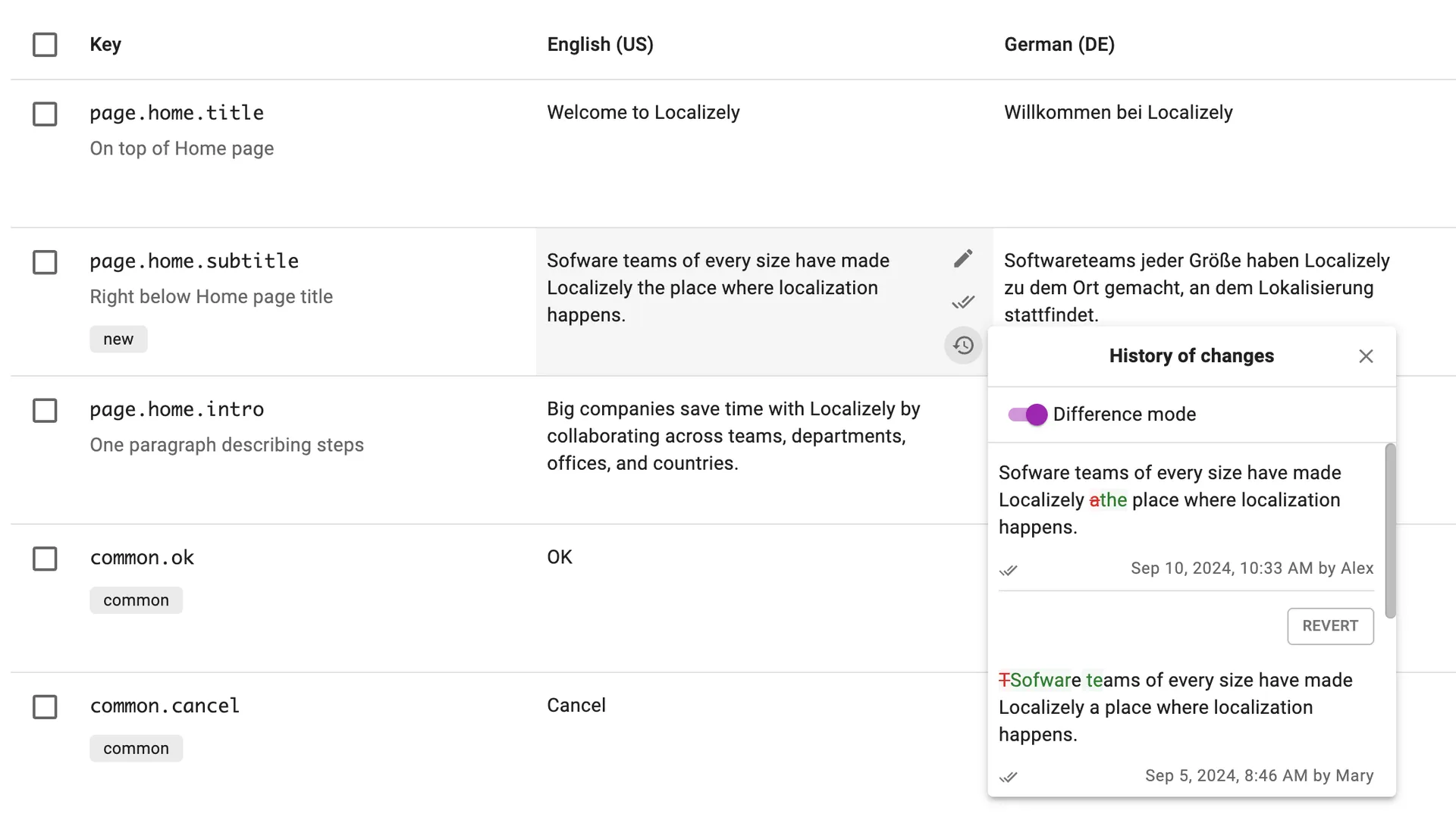
Translation search
Working on a project with hundreds or thousands of string keys is no problem. Just type your query, and the search will find matches across string key names and translation content in any of the shown languages.
Filters
Sometimes you want to see only untranslated or unreviewed strings that need your attention before going live with a new app version. You can also filter by a task you created for your translators, or check the status of a professional translation order you placed through the Localizely platform.
Editor
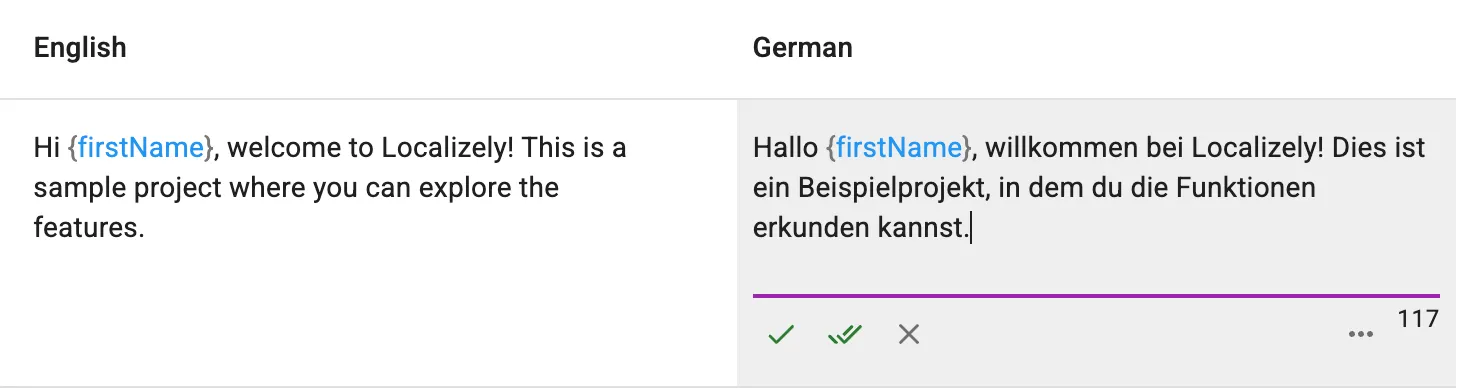
The editor assists you throughout the translation process. It provides syntax highlighting for placeholders, marks text that should not be translated, and helps you with ICU messages that can get complex.
Placeholders
In projects with universal placeholders, the Placeholders tab lists the placeholders of the string key together with the token each platform uses for them. From there you can insert a placeholder into the translation with a click, rename a placeholder in every language, and preview the translation in the syntax of every platform.
Key description
Give your string keys more context by adding a textual description or attaching screenshots. This helps both translators and AI understand each string better, resulting in more accurate translations.

Comments
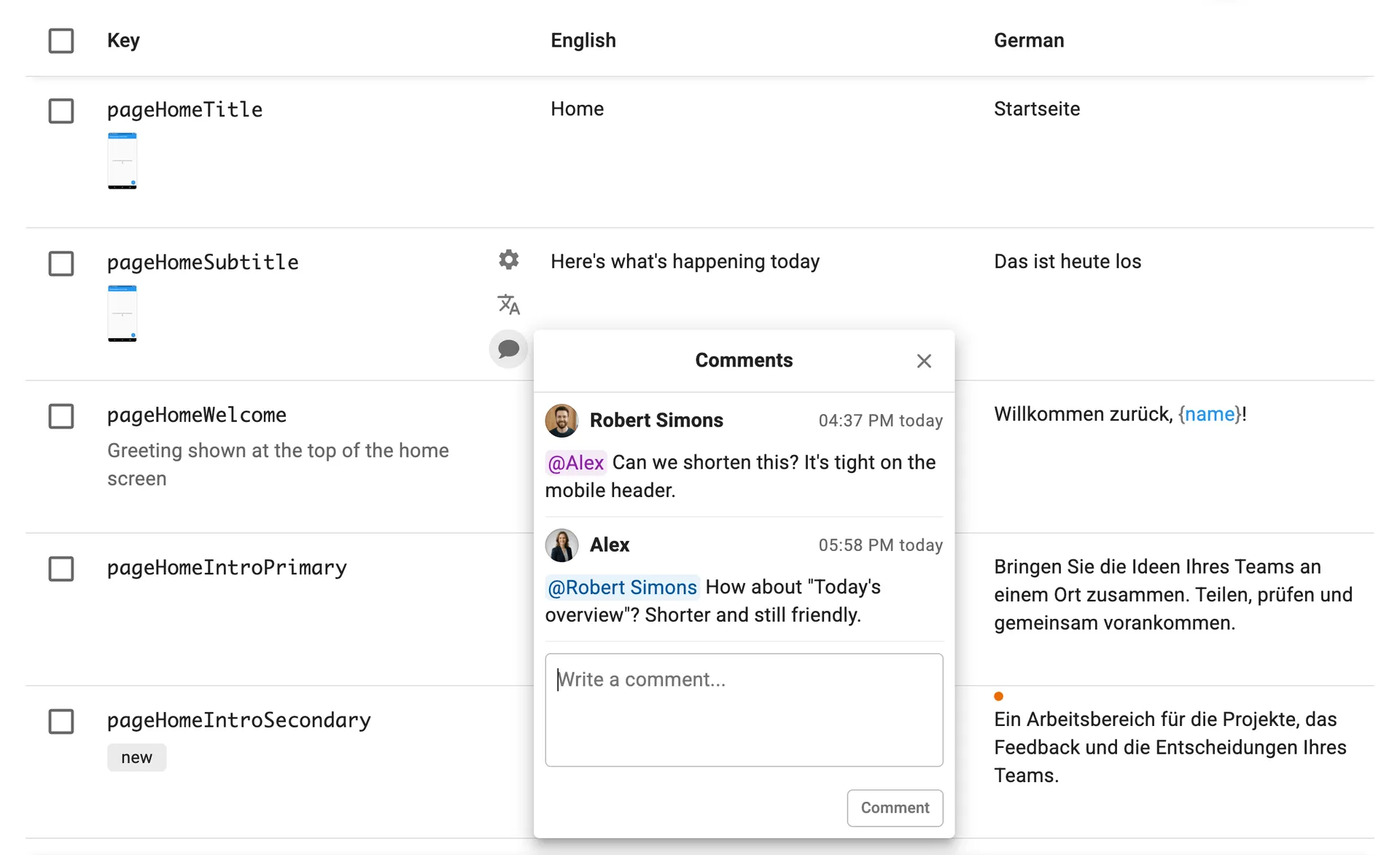
Every key has its own comment thread, so questions about wording, tone, or context stay right next to the string they concern. Use @mentions to bring in a colleague, and they are notified immediately. Decisions are kept with the key, where anyone on the project can find them later.
QA checks
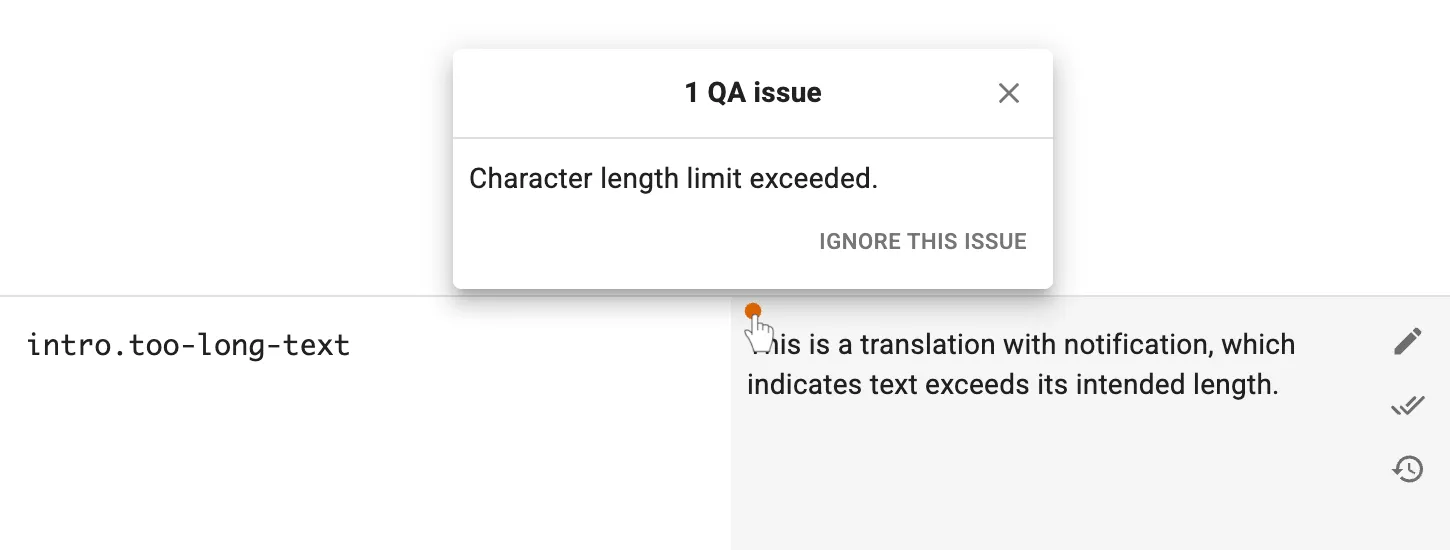
The editor automatically runs QA checks on your translations and notifies you when an issue is detected, such as a placeholder mismatch, invalid ICU syntax, or an exceeded length limit. This helps you catch problems early, before they reach your users.
Translation Memory
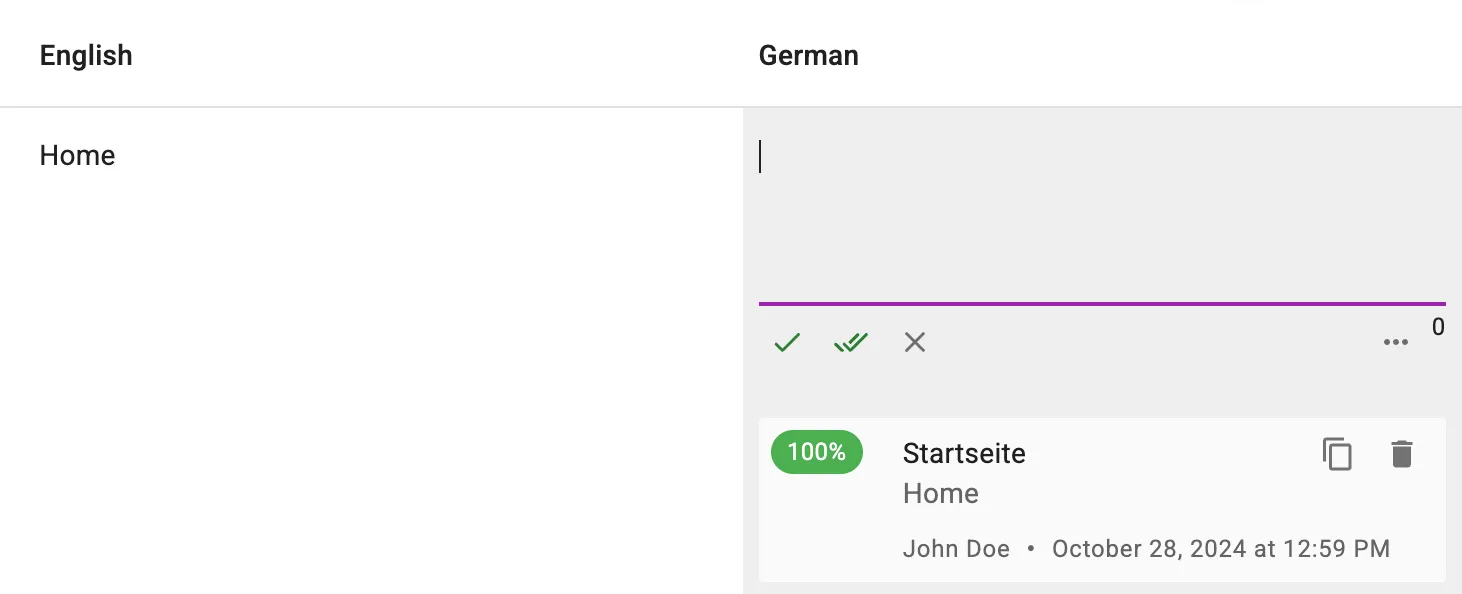
Translation Memory (TM) automatically saves your reviewed translations and makes them available as suggestions in other projects. It saves time when you work across multiple projects and keeps your translations consistent.
Glossary suggestions
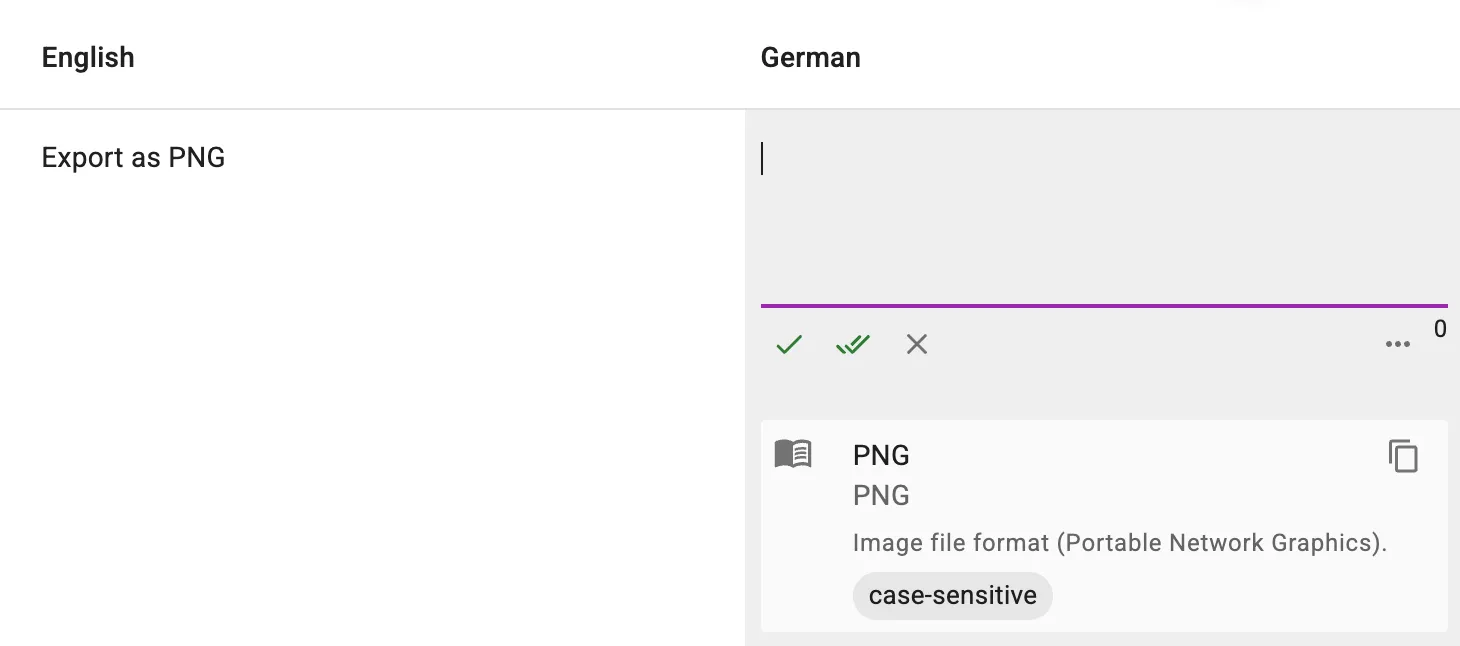
A glossary is a set of words or phrases along with their definitions and preferred translations, used as a reference to keep terminology consistent across languages. When the main translation contains a glossary term, the editor shows you how it should be translated, helping your translators and AI produce more accurate translations.
AI Translation
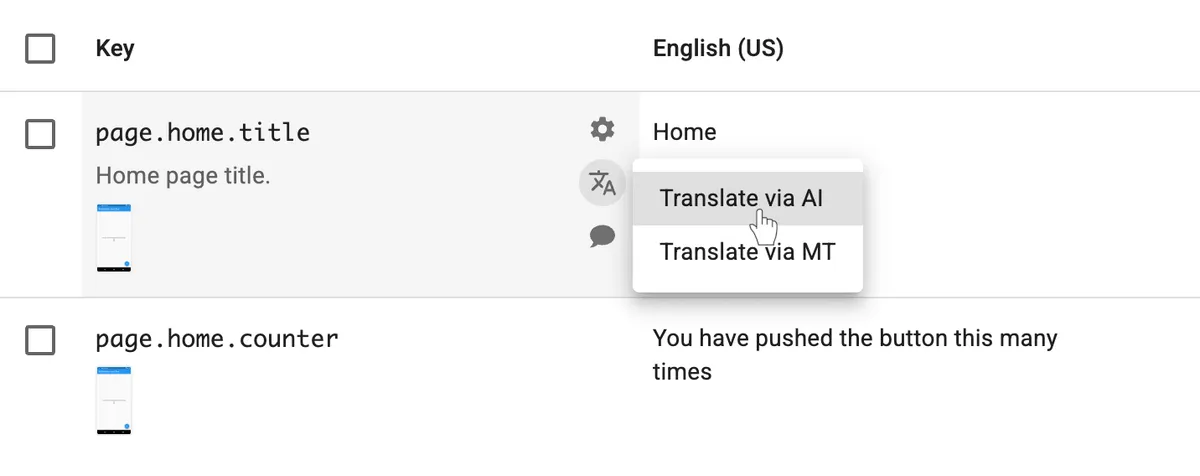
AI Translation fills in missing translations across your project's languages with an understanding of context, tone, and meaning rather than word-for-word substitution. It takes the key description, attached screenshots, and glossary terms into account, so the result reads naturally and fits your product. Translate a single string inline or run a batch across several languages at once, and let your team refine from there.
Machine Translation
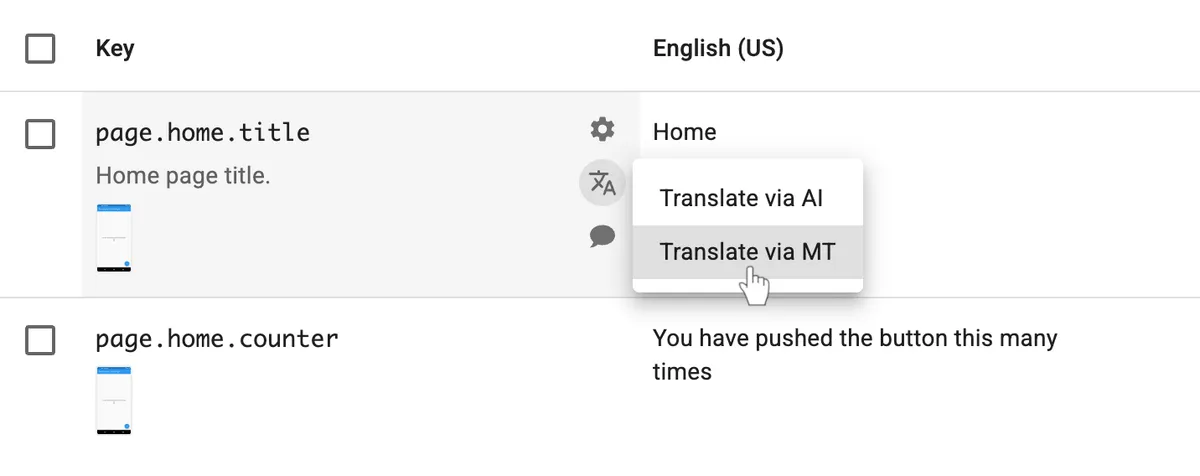
Machine Translation is also available for a quick, literal first pass. It is well suited to large volumes of internal or non-customer-facing content where speed matters more than nuance, and it fits naturally into workflows with human post-editing.
Previous: Localization workflow
Read next: Organizations
Tired of manually editing translation files?
Our platform streamlines software localization for you.
Documentation
- What is Localizely?
- Getting started
- Localization workflow
- Translation editor
- Organizations
- Flutter Over-the-Air updates
- Flutter In-Context Editing
- Project branching
- Public projects
- Professional translation services
- Machine Translation
- AI Translation
- Translation Memory
- Glossary
- Tasks
- QA checks
- Reports and Statistics
- Figma integration
- AWS S3 integration
- GitHub integration
- GitLab integration
- Bitbucket integration
- CLI
- Configuration file
- Supported file formats
- Universal placeholders
- Language & Country Codes
- Referral Program
- Affiliate Program
- FAQ

Resources
- What is Localizely?
- Getting started
- Localization workflow
- Translation editor
- Organizations
- Flutter Over-the-Air updates
- Flutter In-Context Editing
- Project branching
- Public projects
- Professional translation services
- Machine Translation
- AI Translation
- Translation Memory
- Glossary
- Tasks
- QA checks
- Reports and statistics
- Figma integration
- AWS S3 integration
- GitHub integration
- GitLab integration
- Bitbucket integration
- CLI
- Configuration file
- Supported file formats
- Universal placeholders
- Language & Country Codes
- Referral Program
- Affiliate Program
- I18N Questions
- FAQ
Free tools
- ICU message for translators
- ICU message editor
- Hreflang generator
- Hreflang checker
- JSON Flattener
- JSON Validator
- YAML Validator
- XML Validator
- CSV Validator
- Text Compare
- Text Encoding Converter
- Localization File Converter
- JSON Word Counter
- ARB Word Counter
- Translation Cost Calculator