
Glossaries
Make sure the terms that matter are translated the same way, every time.
Documentation
- What is Localizely?
- Getting started
- Localization workflow
- Translation editor
- Organizations
- Flutter Over-the-Air updates
- Flutter In-Context Editing
- Project branching
- Public projects
- Professional translation services
- Machine Translation
- AI Translation
- Translation Memory
- Glossary
- Tasks
- QA checks
- Reports and Statistics
- Figma integration
- AWS S3 integration
- GitHub integration
- GitLab integration
- Bitbucket integration
- CLI
- Configuration file
- Supported file formats
- Universal placeholders
- Language & Country Codes
- Referral Program
- Affiliate Program
- FAQ
A glossary is a curated list of words and phrases that matter to your product, each with a definition and, where needed, an approved translation. Brand names, industry terms, and words with more than one meaning are the usual candidates. With a glossary in place, translators and AI Translation know exactly how to handle those terms, so your translations stay consistent and the guesswork disappears.
Whenever a glossary term appears in the source text, the editor highlights it and shows how it should be translated:
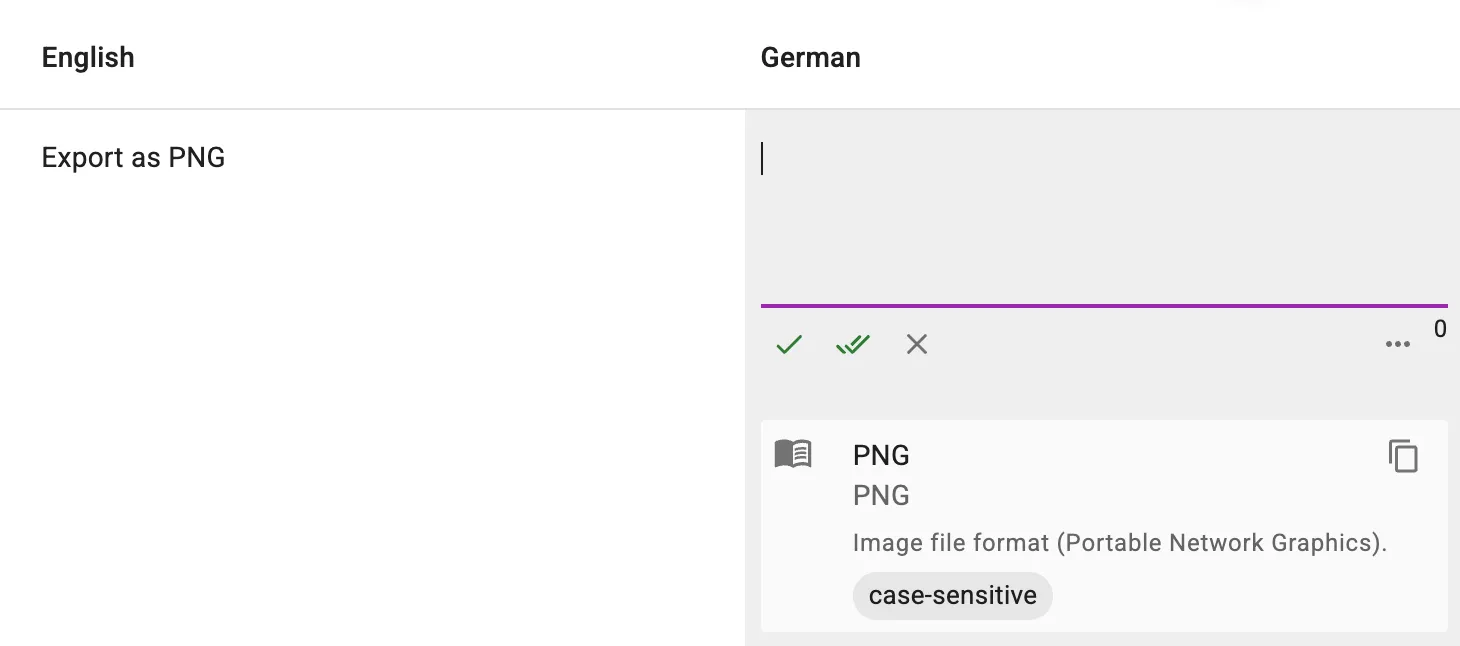
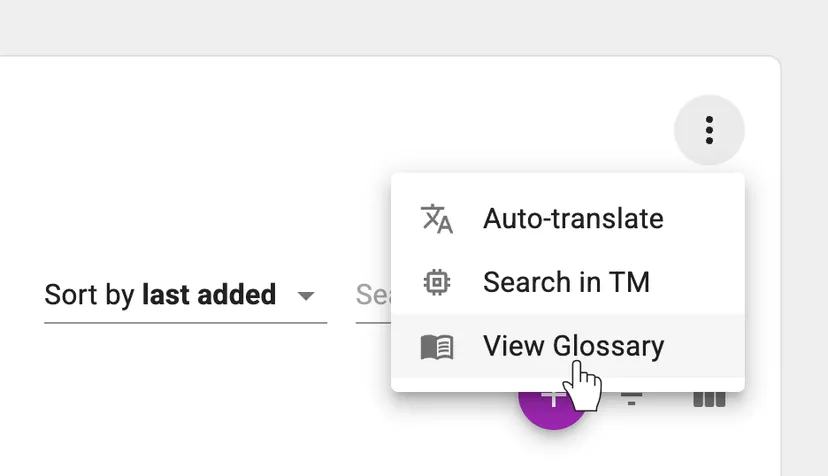
Everyone working on a project can browse its full glossary from the Translations page. Adding and editing terms is reserved for the organization owner and admins.
Setting up a glossary
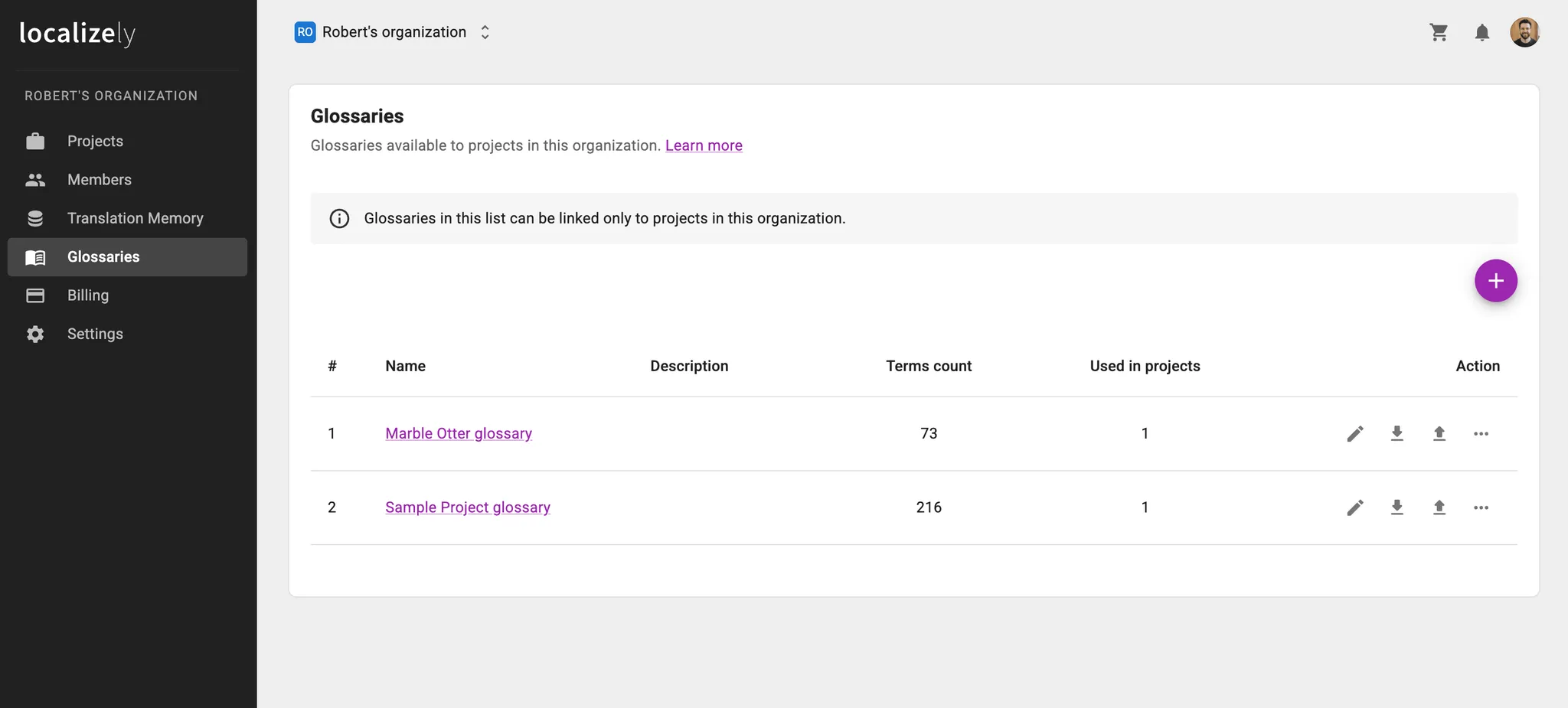
Glossaries belong to your organization, so one glossary can serve several projects. The organization owner and admins create and manage them from the Glossaries section of the organization menu.
Each project then picks the glossary it uses. The project owner and project admins select it on the project's Settings page.

When several projects rely on the same terminology, point them all at one shared glossary and maintain the terms in a single place. Shared glossaries are available on the Gold plan.
Managing glossary terms
For each term you decide whether it gets a translation per language or stays identical in every language, which is typical for brand and product names.
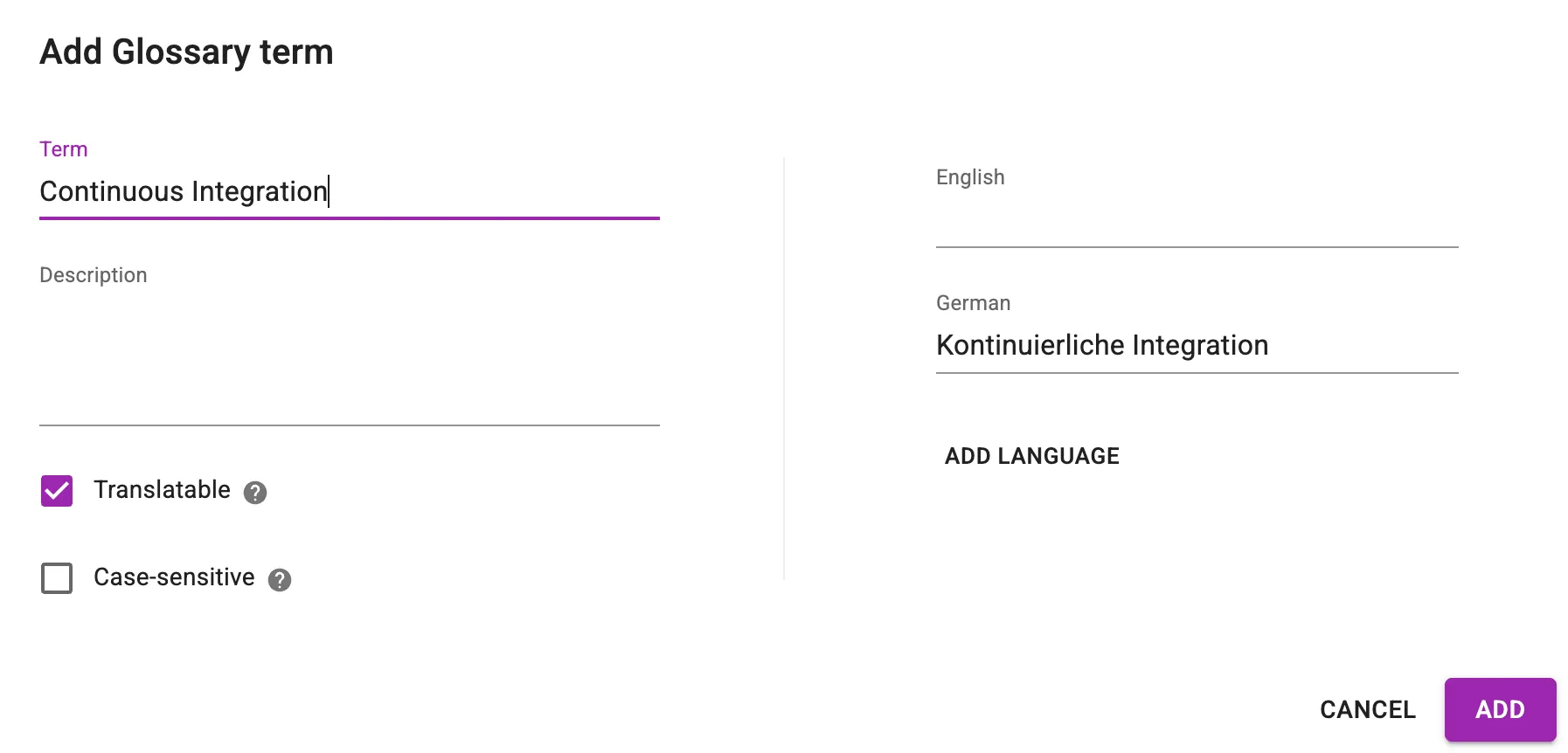
You can also mark a term as case-sensitive so translators keep its exact capitalization. “PNG”, for example, should never become “png”.
Importing and exporting a glossary
The organization owner and admins can export a glossary to CSV or import terms from one using the Export and Import buttons on the Glossaries page. This is the quickest way to bring an existing terminology list into Localizely.
A CSV file must follow these rules to import correctly:
- The file must start with a header row.
- The first four columns must be
term,description,case_sensitive, andtranslatable. case_sensitiveandtranslatabletaketrueorfalse.- Each following column is headed by a language code used in your glossary, such as
deoren-US.
Here is an example of a valid .csv file:

Importing updates any existing terms that match the file. Languages that are missing or left empty in the file are not touched, so a partial import never erases translations you already have.
Previous: Translation Memory
Read next: Tasks
Tired of manually editing translation files?
Our platform streamlines software localization for you.
Documentation
- What is Localizely?
- Getting started
- Localization workflow
- Translation editor
- Organizations
- Flutter Over-the-Air updates
- Flutter In-Context Editing
- Project branching
- Public projects
- Professional translation services
- Machine Translation
- AI Translation
- Translation Memory
- Glossary
- Tasks
- QA checks
- Reports and Statistics
- Figma integration
- AWS S3 integration
- GitHub integration
- GitLab integration
- Bitbucket integration
- CLI
- Configuration file
- Supported file formats
- Universal placeholders
- Language & Country Codes
- Referral Program
- Affiliate Program
- FAQ

Resources
- What is Localizely?
- Getting started
- Localization workflow
- Translation editor
- Organizations
- Flutter Over-the-Air updates
- Flutter In-Context Editing
- Project branching
- Public projects
- Professional translation services
- Machine Translation
- AI Translation
- Translation Memory
- Glossary
- Tasks
- QA checks
- Reports and statistics
- Figma integration
- AWS S3 integration
- GitHub integration
- GitLab integration
- Bitbucket integration
- CLI
- Configuration file
- Supported file formats
- Universal placeholders
- Language & Country Codes
- Referral Program
- Affiliate Program
- I18N Questions
- FAQ
Free tools
- ICU message for translators
- ICU message editor
- Hreflang generator
- Hreflang checker
- JSON Flattener
- JSON Validator
- YAML Validator
- XML Validator
- CSV Validator
- Text Compare
- Text Encoding Converter
- Localization File Converter
- JSON Word Counter
- ARB Word Counter
- Translation Cost Calculator